Guyana is entering a new era of business innovation. With its rapidly growing economy fueled by oil discoveries, infrastructure expansion, and increased global trade, organisations in the country are searching for ways to modernise and compete on an international scale. Among the many tools available, ERP systems development has emerged as a critical enabler of digital transformation.
This blog explores why ERP has become the backbone of modern businesses in Guyana, how it supports growth, and why it pairs so effectively with app development on mobile to create seamless, connected enterprises.
1. The Guyanese Business Landscape Is Changing
A decade ago, many businesses in Guyana operated with manual processes, isolated data systems, and spreadsheets that made collaboration difficult. Today, customers demand faster responses, governments expect compliance, and global investors want efficiency and transparency.
Here’s what’s driving the shift:
- Energy and resource industries require streamlined supply chain management.
- Retail and eCommerce demand real-time inventory tracking and customer engagement.
- Financial institutions need accuracy in reporting and data security.
- The healthcare and education sectors aim for efficiency in operations and service delivery.
ERP systems step in as a unified solution that connects every department—from finance to HR, procurement, sales, and customer service.
2. What Makes ERP the Backbone of Digital Transformation?
ERP (Enterprise Resource Planning) is more than just software. It’s a strategy to centralise and standardise how a business operates.
Think of ERP as the central nervous system of an organisation:
- Finance data flows in real-time.
- Inventory levels are always visible.
- Employee performance and payroll are integrated.
- Customer interactions are tracked and improved.
Without ERP, businesses operate in silos, leading to inefficiency and costly delays. With ERP, companies in Guyana can:
- Improve productivity with automation.
- Make smarter decisions with real-time insights.
- Enhance compliance with accurate record-keeping.
- Deliver better service with integrated workflows.
3. The Role of ERP Systems Development in Guyana
Off-the-shelf ERP systems don’t always match the unique needs of Guyanese businesses. This is where ERP systems development becomes crucial. Local developers and IT providers can customise ERP platforms to:
- Handle regional tax and compliance requirements.
- Support industries like agriculture, mining, and logistics.
- Integrate with banking systems and payment gateways.
- Scale as businesses expand into global markets.
By investing in ERP systems development, companies in Guyana aren’t just adopting a digital tool—they’re building a tailored backbone that supports long-term growth.
4. ERP Meets Mobile: A Perfect Partnership
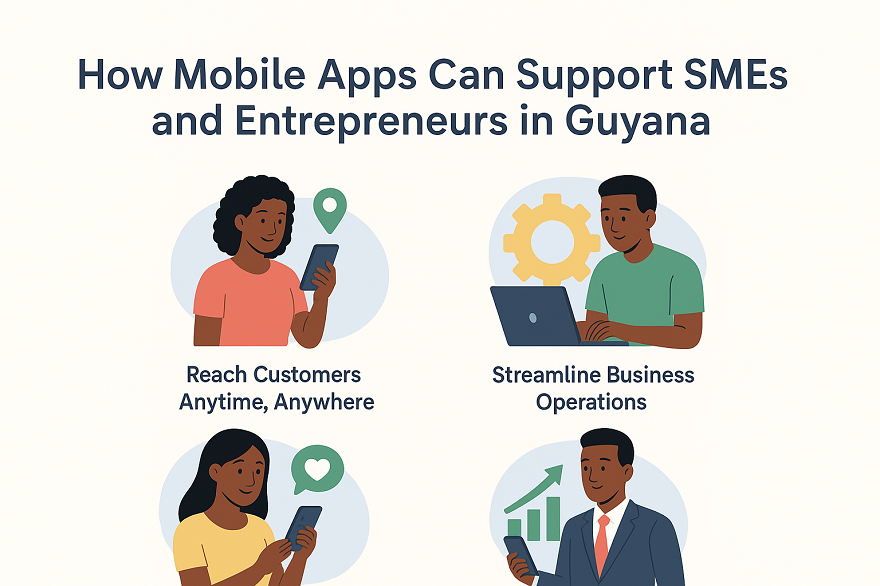
Digital transformation isn’t only about what happens on desktop systems. Modern employees, customers, and partners rely heavily on mobile devices. That’s why app development on mobile is the natural extension of ERP.
Imagine these scenarios in Guyana:
- A logistics manager tracks fleet deliveries in real-time via a mobile ERP dashboard.
- Sales staff update customer orders from their phones during client visits.
- Field workers in agriculture record crop data directly into the ERP system using a mobile app.
- Executives receive push notifications on key financial metrics while travelling.
When ERP integrates with mobile app development, it empowers staff and stakeholders to stay connected from anywhere. This mobility is essential in industries where speed, accuracy, and responsiveness determine competitive advantage.
5. Case in Point: How ERP Helps Different Sectors in Guyana
To see how ERP and mobile apps reshape industries, let’s consider practical examples:
- Oil & Gas: Real-time resource tracking, compliance with international standards, and automated reporting.
- Retail: Mobile ERP apps for stock management, supplier integration, and customer loyalty programs.
- Agriculture: Data collection from the field, weather insights integration, and production forecasting.
- Healthcare: Patient record management, inventory for medicines, and staff scheduling.
Each of these industries benefits from ERP’s backbone structure, made even stronger by mobile-enabled accessibility.
6. The Human Side of ERP in Digital Transformation
Technology is powerful, but it’s people who drive transformation. In Guyana, ERP adoption is not just about software—it’s about building a culture of innovation and data-driven decision-making.
- Employees spend less time on repetitive tasks and more time on strategic work.
- Managers gain visibility into operations and can lead with confidence.
- Customers experience better service and quicker responses.
The result? Guyanese businesses not only keep pace with global competitors but also set new standards for efficiency in the region.
7. Challenges and the Path Forward
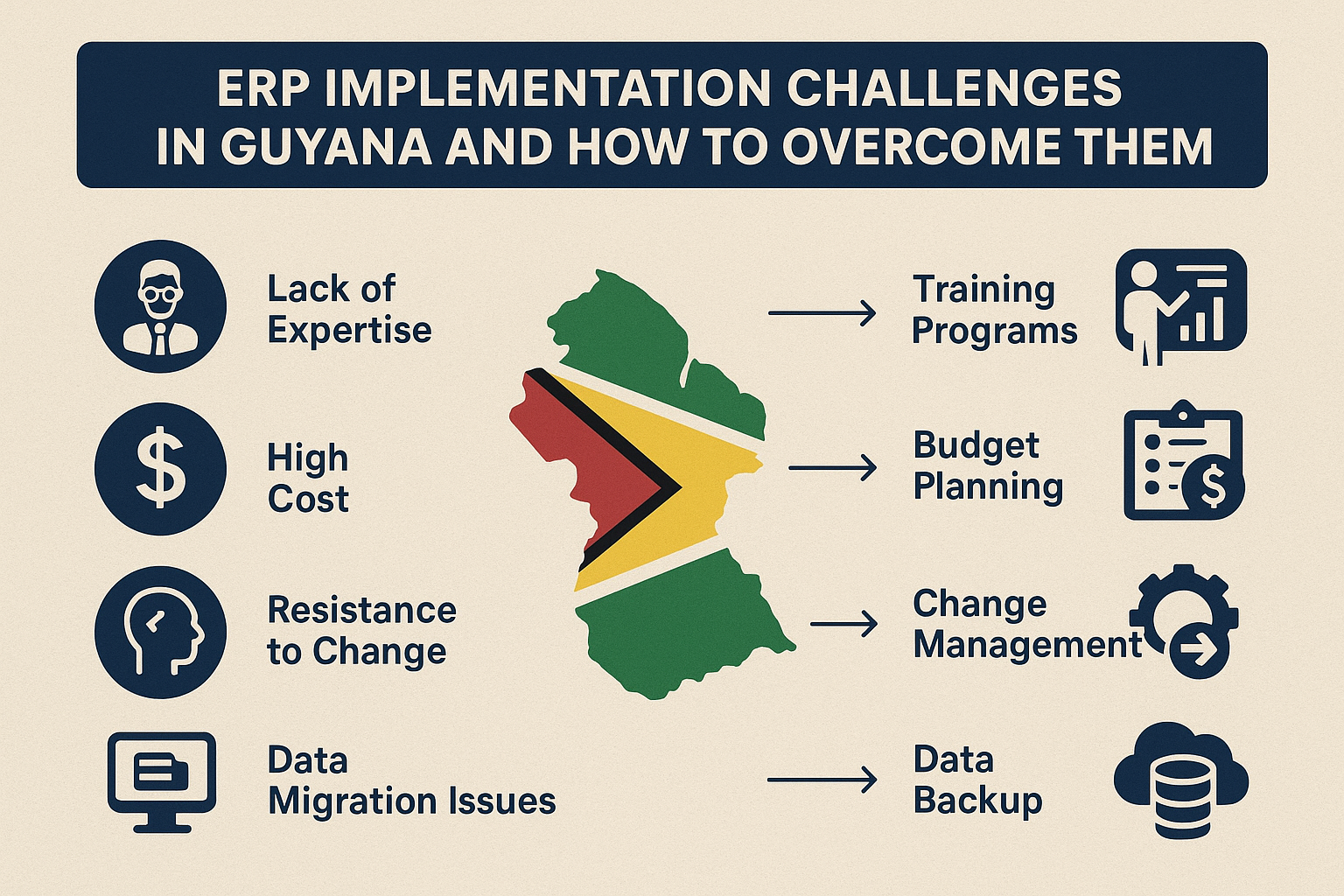
Of course, adopting ERP isn’t without challenges. Some businesses face resistance to change, others worry about cost, and some struggle with technical expertise. However, these challenges can be managed by:
- Partnering with experienced ERP systems development firms.
- Offering staff training to ease the transition.
- Starting small and scaling ERP solutions as the business grows.
The combination of ERP systems and mobile apps creates a resilient, future-ready foundation that ensures Guyana’s businesses remain competitive.
8. Conclusion: Why ERP Is the Backbone of Modern Businesses in Guyana
Digital transformation in Guyana is no longer optional—it’s the key to long-term success. ERP systems development provides the backbone that integrates operations, ensures compliance, and delivers real-time insights. When combined with app development on mobile, businesses gain agility, mobility, and the ability to serve customers anywhere, anytime.
For organisations in Guyana, ERP isn’t just a software solution—it’s a strategic investment in the future.